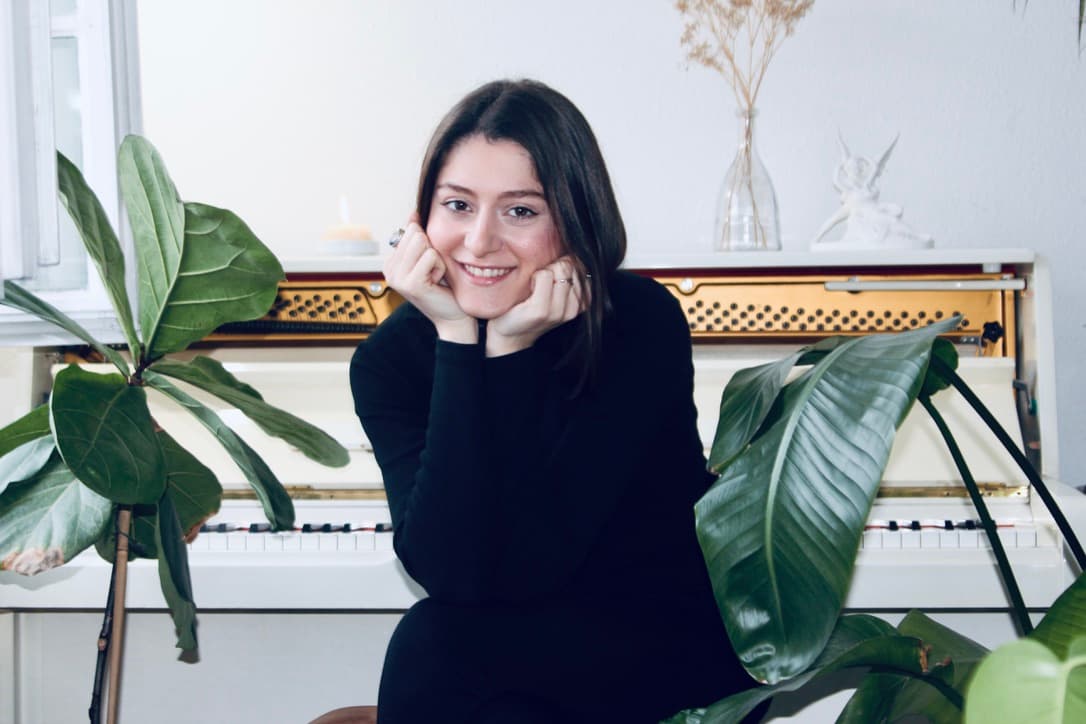
There's a moment I see again and again. A child sits at the piano for the first time, presses a key — and stops. Not because they're unsure. Because they're listening. They want to understand what just happened.That listening is where everything starts. Not the right note, not clean technique. Just the curiosity that sparks when sound and body meet for the first time.I've thought about that moment a lot. Because it turns out the researchers in Berlin were thinking about something similar.
What the Berlin study actually found
In the 1990s, the music researcher Hans Günther Bastian and his team began following a large group of Berlin primary-school children over several years. They wanted to know whether music lessons made children smarter — and they were careful about how they framed that question, because it's easy to get it wrong. Clever children take music lessons. Families who value education do both. How do you separate the effect of music from everything else?What they found, when they controlled for those factors, was striking. Children who received regular music instruction showed measurably higher IQ scores than those who didn't — not because they were gifted to begin with, but because something in the training itself was changing how their brains processed information.The finding that surprised researchers most: the effect was strongest not among children who showed early talent, but among entirely ordinary children who simply stuck with it.That last detail matters. This wasn't about prodigies. It was about persistence.
Why music is different from other cognitive training
Here is what happens in the brain of a child playing piano: they are reading notation, coordinating their left and right hands independently, listening to the sound they're producing, anticipating the next phrase, and maintaining a steady beat — all simultaneously. That is five distinct cognitive processes running in parallel. Neuroscientists have a term for this kind of load: it demands the kind of focused, divided attention that almost nothing else in a child's daily life requires.Compare it to, say, a maths worksheet. That's one cognitive channel. Or a video game — fast, reactive, but not multimodal in the same way. Music is unusual because it recruits so many systems at once: motor, auditory, linguistic, spatial, executive. Each time a child practises, they're not just learning music. They're building the neural infrastructure for concentration itself.Which is why the Berlin finding makes sense, once you understand the mechanism. The IQ gains weren't some mysterious side effect. They were a predictable consequence of training the brain to hold more things in mind at the same time.
What rhythm does to language
The Berlin study was about cognition broadly. But researchers working in a different field — linguistics and developmental psychology — had been noticing something specific: children who had musical training were learning to read faster.The explanation, when it came, was elegant. Music and language share more neural real estate than anyone had expected. The brain processes the rhythm of music and the rhythm of speech along overlapping pathways. When a child claps back a pattern or sings a phrase, they're not just exercising their musical ear. They're sharpening phonological awareness — the ability to hear and manipulate the sounds inside words, which turns out to be the single strongest predictor of reading success.I see this directly in my voice lessons. Children who sing regularly develop something you can't get from a textbook: a fine-grained sensitivity to language. They speak more clearly. They express themselves with more precision. Their vocabulary grows, not because they drilled it, but because they sang it — and singing forces you to hold words in your mouth, to feel their shape, to hear their rhythm.Songs are language lessons that don't feel like lessons. That's what makes the difference.
The fingers and the mind
Watch a child's hands in their first piano lesson. The fingers stiffen. The thumb locks. Every key feels like a negotiation. Now watch the same child six months later. The hands have learned something the rest of the body hasn't caught up to yet — a fluency, a looseness, an almost unconscious coordination between thought and touch.Fine motor development is one of the less discussed benefits of early music education, but parents notice it almost immediately. I hear versions of the same comment constantly: "Since he started piano, he's so much better with scissors." Or: "Her handwriting has completely changed." These aren't coincidences. When children train the precise, controlled movements required to play an instrument — the graduated pressure of a finger on a key, the independence of each digit — they're building capacities that transfer directly to writing, to sport, to everything that requires the hand to do exactly what the mind intends.The gross motor picture is equally interesting. Children in musical groups who clap, stamp, move to rhythms, coordinate arms and legs together — they develop body awareness and spatial orientation faster than their peers. It's not a side benefit. It's baked into the activity itself.
What happens in a group that can't happen alone
The Berlin researchers were studying individuals. But music, for most of human history, has been a social practice. And the social dimension of musical learning turns out to carry its own set of effects, ones that are harder to measure but no less real.Making music together requires a particular kind of listening — not to yourself, but to others. When is my entrance? Am I too loud? What is the person next to me doing right now? Children in musical groups are running a continuous, low-level social calculation: they are practising empathy in real time, without anyone calling it that. Patience, attentiveness, the experience of contributing something that matters to a collective whole — all of it arrives without worksheets, without reminders.Nearly half of all parents in studies on group music education report that their children became more confident and more socially aware through the experience, and not just inside lessons. That matches what I observe. Music builds community in a way that children understand instinctively, before they have words for it.
When to start
The short answer: earlier than most people think.Early music education often begins at three or four, and that is not too young. At that age, children are absorbing rhythm, sound, and melody before anyone has to explain it. The earlier they start, the more naturally music becomes part of how they hear the world — not a skill they're acquiring, but a language they're growing up in.Starting at six or eight is not too late. But children who've had musical experiences before primary school bring something to a first lesson that is genuinely difficult to recreate later: an inner sense of music, a feel for pulse and phrase and pitch, that settled in quietly long before they ever knew it was happening.
What the first key does
Returning to that child at the piano — the one who pressed a key and then stopped to listen. The Berlin researchers would have recognised that pause. It's the beginning of a particular kind of attention: focused, curious, open to what comes next.Music education, at its best, is attention training. It is language training. It is motor training and social training and — in ways that took decades of research to untangle — it is cognitive training, the kind that shows up years later in school results and social ease and the simple ability to hold a difficult thing in mind long enough to understand it.That child pressing a key is not becoming a musician yet. They are becoming something harder to name: a person with slightly more capacity for focus, for language, for patience, for listening. Not because music is magic. Because what the brain learns when it learns music turns out to be exactly what it needs for almost everything else.If you're wondering whether your child should start: yes. Not because they need to become a musician. Because music awakens something in children that no other path reaches quite as playfully, or as lastingly.The first step is a single key. Everything else follows from the listening.
Key takeaways
A randomized controlled trial settles the causal question.Schellenberg (2004) randomly assigned 144 six-year-olds to music or control lessons for a school year; the music groups gained about 2.7 more IQ points than the controls — a small effect, but a real and measured one.
The long Berlin study points the same way. Hans Günther Bastian's multi-year study of Berlin primary schools (1992–1998) found that extended music education improved intelligence, concentration, and social skills — with the clearest gains among ordinary and socially disadvantaged children, not prodigies.
Music is unusual cognitive training because it runs motor, auditory, linguistic, spatial, and executive systems in parallel — and that shared wiring is why musical rhythm strengthens the phonological awareness that so strongly predicts reading.
Earlier is easier, but six or eight is not too late. What young starters bring is an inner feel for pulse, phrase, and pitch that settled in before they knew it was happening.
References
Schellenberg, E. G. (2004). Music lessons enhance IQ. Psychological Science, 15(8), 511–514. PubMed
Bastian, H. G. (2000). Musik(erziehung) und ihre Wirkung: Eine Langzeitstudie an Berliner Grundschulen (1992–1998). Schott.
Ceren Soyer teaches piano and voice in Hamburg, at the studio on Deichstraße 32 in Hamburg-Altstadt and online. Piano trial lessons are available for children from age five, voice from thirteen.
Reading about it is one thing — sitting at the piano is another.