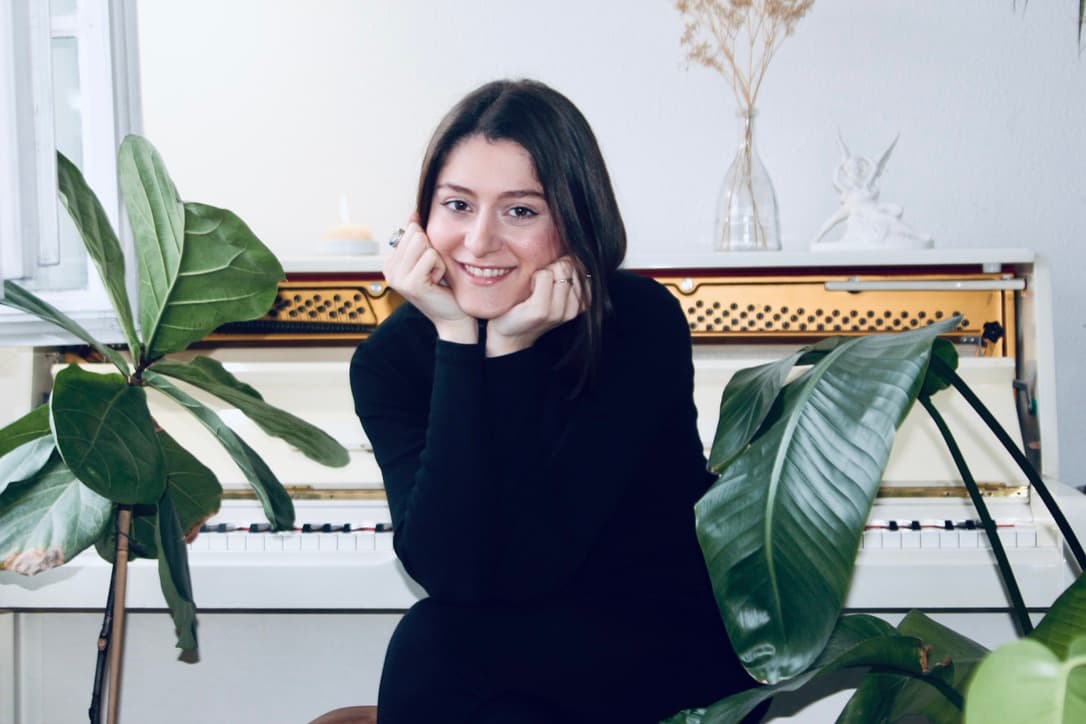
Curious to try this yourself?Book a Trial LessonA few years ago, a woman in her mid-forties came to me carrying a battered copy of a Beethoven sonata. She had been taking lessons with another teacher for two years. She could play through the first page — slowly, haltingly, with her eyes glued to the score — and when she finished, she looked up and said: "I don't understand why I'm not getting better."I asked her to play a passage again, just the right hand, slowly. Then I asked her what she did at home when she found a bar difficult. She thought about it. "I play the whole piece from the beginning and hope it comes out better," she said.That is a perfect description of how most piano students practice. And it is almost perfectly designed to produce the experience she was describing: years of effort, minimal progress, mounting frustration.The problem was not this woman's dedication. She practiced every day. The problem was not her talent — she had good ears and genuinely musical instincts. The problem was that no one had ever taught her how to practice. Not what to practice. How.This distinction, between what and how, is one of the things I've thought most about over ten years of teaching piano, in Turkey and now in Hamburg. What actually separates a lesson that changes a student from a lesson that merely fills an hour? The answer, I've come to believe, is not about the teacher's performance level or the prestige of their conservatory degree. It's more granular than that — and more interesting.
The Curriculum Trap
There are published piano methods that lay out a progression with the confidence of a pharmaceutical trial: this piece in week three, that scale in month two, this etude by the end of year one. These methods exist for good reasons. They've been tested with thousands of students, they're sequenced sensibly, and they work — on average.But "on average" is a strange thing to teach toward. A nine-year-old who already has a year of choir and solid ear training moves through early keyboard material completely differently than a nine-year-old encountering organized sound for the first time. An adult who practices twenty focused minutes a day, every day, will outpace an adult who sits down for two hours every Sunday and grinds through the same passages in the same order. Same method book, same lesson structure, radically different trajectories.What this means in practice is that the method book is a map, not a route. I use it as a reference. I don't follow it like a script. The lesson changes based on what the student brings into the room — what they actually practiced during the week, what they found baffling, what suddenly clicked, what they heard on the radio and couldn't stop thinking about. The lesson is built around that student in that moment, not around where a curriculum says they theoretically should be.This sounds obvious when stated plainly. It is somehow not the universal approach.
The 10,035 Minutes Problem
Here is the arithmetic of piano lessons that almost no one talks about explicitly.A standard lesson is 45 minutes. A week is 10,080 minutes. Even if a student practices an hour every day — which is more than most adult beginners manage — that leaves roughly 10,035 minutes of the week untouched by any instruction. What students do with those 10,035 minutes is, functionally, what determines how fast they improve. The lesson is the seed. The week is the soil.Most students, left to their own devices, practice the way the woman with the Beethoven sonata did: they start at the beginning and play through. This feels productive. You are, after all, playing the piano. But what you are actually doing is rehearsing your mistakes. The sections you can already play get polished further. The bar that trips you up gets tripped over, again, at full speed, and then you restart from the beginning and trip over it again.The alternative is not complicated. You find the one measure that isn't working — just that measure — and you slow it down until it is correct. Then you bring it back up to tempo in small increments. You do this for that measure specifically, not as a detour before going back to the beginning, but as the work. You isolate the problem rather than running through it repeatedly and hoping for a different result.I spend time in every lesson on exactly this: not just assigning what to practice but demonstrating how. And every student leaves with a written practice plan — not "practice pages four through six" but specific instructions: which hand first, at what metronome marking, for how many repetitions before switching. The specificity matters more than it seems like it should. A vague instruction like "work on the bridge section" produces vague results. A specific instruction produces a student who knows, at 8pm on a Tuesday, exactly what to do.The change in most students who actually apply this, within two weeks, is dramatic enough to be slightly startling.
What Honest Feedback Actually Sounds Like
I've observed teachers who praise everything, and teachers who appear to have taken a vow never to praise anything. Both approaches fail, though in interestingly different ways.The constant-praise teacher creates students who cannot self-assess. They've been told every attempt is wonderful for long enough that they've lost the ability — or never developed it — to hear what's wrong. They play a phrase with a badly mistimed ornament and they can't hear it, because no one has ever helped them develop that particular muscle. They feel good about their playing in a way that is, ultimately, not going to serve them.The never-praise teacher creates students who stop trusting their own judgment in the other direction: they assume everything is wrong, they hear their own playing with a relentlessly critical ear, and at some point, often around month eight or year two, they quietly decide that they are simply not musical people and stop coming to lessons.The useful feedback is specific in both directions. "That phrase sounded genuinely connected — the way you shaped the end of it was musical." And: "Your left hand is rushing in bars five through eight; I can hear it pulling ahead of the right hand. Let's slow those bars down and work on them together right now." The specificity is what makes criticism useful rather than demoralizing. You're not telling a student they're bad at piano. You're telling them exactly which four bars need attention and why. Those are very different pieces of information to receive.
The Chopin Problem
There's a pattern I've seen enough times that I've come to think of it as a law: a student who loves what they're playing practices more than a student who doesn't. More practice means faster progress. Faster progress sustains motivation. Sustained motivation means the student is still playing piano in five years instead of having given up by Christmas.This sounds obvious. It is, somehow, surprisingly easy to override in favor of methodological tidiness.I have worked with adult students who came to me having been told — by a previous teacher — that they were not ready to attempt a particular Chopin nocturne. They had to finish their method book first. They had to demonstrate sufficient technique. There was a progression, and the Chopin was at the end of the progression, and the progression would take approximately forever.The problem with this logic is that the Chopin nocturne was the reason the person wanted to learn piano. Remove it from the horizon and you haven't helped them learn piano more efficiently. You've taken away their reason for being there.What I do instead: if an adult student wants to work toward a specific Chopin nocturne that's above their current level, we work toward it. We find exercises that build the specific technique that piece requires. We learn a simpler piece with similar structures so the student can hear the shape of what they're building toward. The method book is a tool. The goal is a student who loves playing piano — and keeps playing it after the lessons end.For teenagers who want to work on contemporary pieces or popular music, we find arrangements that fit their technique. For children who would rather play film themes than classical etudes, we find film themes. The etude technique gets built anyway, because good technique is prerequisite to everything, but it doesn't have to be built in the absence of joy.
What You Can't Undo
There is one area where I tend to be more insistent than students sometimes expect, particularly in the first months: physical technique.The habits a student establishes in the first year of piano study are genuinely difficult to change later. I don't mean this as a mild caution. I mean it as a structural fact about how motor learning works. When you practice a physical movement repeatedly, you are not just learning to make that movement — you are making that movement automatic, dropping it below the level of conscious attention. This is the goal. But it means that the movement you automate in month one is the movement you will be executing automatically in year three, and if that movement involves wrist tension or shallow hand positioning or collapsed finger joints, you will be executing those problems automatically in year three.Tension in the wrists slows development. Collapsed finger joints limit evenness and speed. Shallow positioning creates coordination problems that become harder and harder to diagnose as they compound. In serious cases — and I have seen this in adult students who came to me after years of self-teaching — they produce repetitive strain injuries that require physiotherapy and months of adjusted practice to resolve.So I pay close attention to posture, hand position, and wrist movement from the very first lesson. Not rigidly — there is no single correct way to sit at a piano, and individual bodies have individual proportions. But attentively. The frame I use with students is not "you must hold your hands exactly like this" but "here is why a relaxed wrist produces a better sound, and here is what tension actually sounds like." When students understand the reason, they apply it. When they're simply told to follow a rule, they tend to follow it in lessons and forget it at home.
What This Looks Like on a Tuesday in Hamburg
My studio is in Hamburg. I teach children from age five, teenagers at various levels, and adults — including quite a few who stopped playing piano in their twenties and are coming back to it now, sometimes forty years later, with a mix of muscle memory and rust and real motivation.Lessons run 45 minutes. The first lesson is a 25-minute trial session: we meet, I hear you play or hear what you've tried before, we talk about what you actually want from this, and you can decide afterward whether you'd like to continue. There's no commitment on either side before that conversation happens.The students I work best with are the ones who want to understand what they're doing and why — not just to execute instructions, but to develop the kind of self-awareness that means they can keep improving on their own, in between lessons, for as long as they want to play.If that sounds like the kind of lesson you're looking for, book a trial session and we can find out.