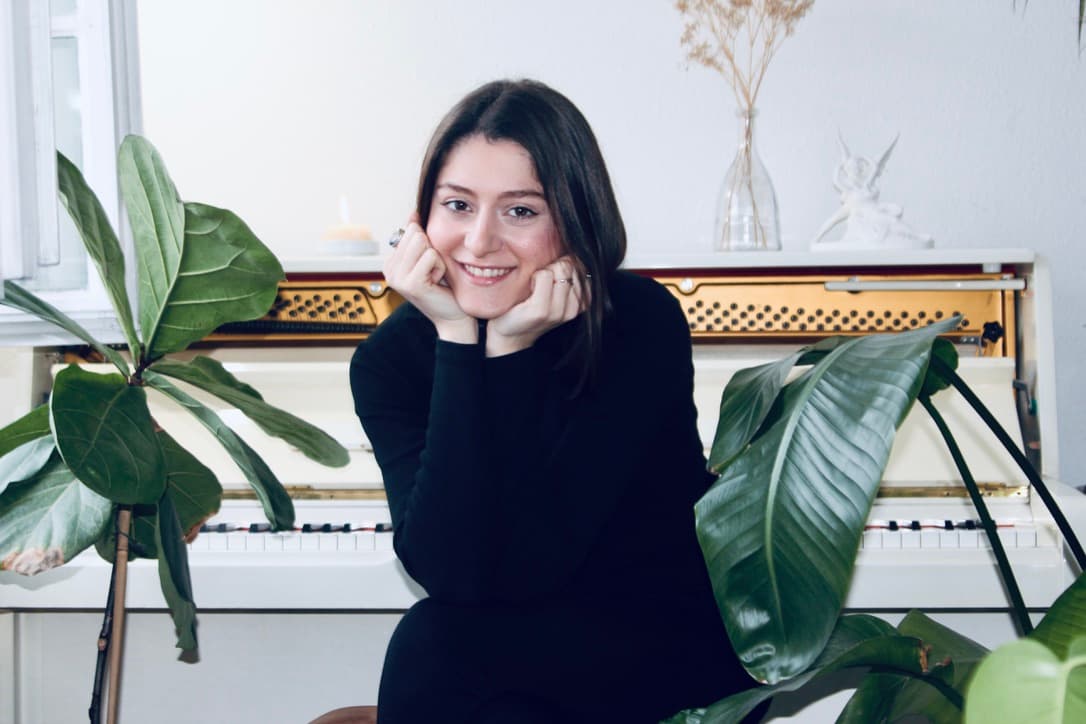
"Ceren, what piano should I buy?"I get this from almost every new student. Parents, adult beginners, returning players — everyone wants a straight answer. Here is the overview; each point has a fuller article linked below.
The One Rule: Weighted Keys or Nothing
If a keyboard doesn't have 88 fully weighted keys, don't buy it. Unweighted or semi-weighted keys teach your fingers the wrong thing. You'll develop habits that are painful to unlearn later.This means budgeting around €330–400. I know that's not what everyone wants to hear, but a €200 keyboard will hold you back more than it helps.Why this is a physical problem rather than a matter of taste — and how to tell real hammer action from springs in sixty seconds — is in why I insist on hammer action.
Beginner: Yamaha P-45
This is what I recommend to most new students. The Ad·Yamaha P-45 ↗ has 88 weighted keys with Yamaha's GHS action, which feels remarkably close to an acoustic piano. At 11.5 kg, it's portable enough to move between rooms.I've recommended this to over 15 students. The ones who practice regularly on it progress just as fast as students with acoustic pianos.
Intermediate: Roland FP-30X
When students are ready to upgrade, I point them to the Ad·Roland FP-30X ↗. The sound quality jump is significant — Roland's SuperNATURAL engine captures the resonance and decay of a real grand piano.The Bluetooth feature is a quiet game-changer. Students can play along with recordings through the piano's speakers, which makes practice sessions more engaging.
Advanced: Yamaha P-225
For students practicing daily and working through intermediate repertoire, the Ad·Yamaha P-225 ↗ is my recommendation. The CFX sound engine was sampled from Yamaha's flagship concert grand, and you can hear the difference.
Digital vs. Acoustic: My Take
For the first 2–3 years, digital is almost always the better choice:
No tuning costs (€80–150/year saved)
Practice with headphones (your neighbors will thank you)
Lighter, more portable
Built-in metronome and recording
Once you're sure music is a long-term part of your life, an acoustic piano is a wonderful investment. But don't rush it.If you rent, that ordering matters even more. How to practise in a flat without anyone complaining — and why headphones alone are not enough — is in practising piano in an apartment.
What About 61-Key Keyboards?
I don't recommend them. You'll run out of keys within months. The Yamaha P-45 is only 133 cm wide — about the width of a small desk. If you have room for a desk, you have room for a proper piano.
Where to Read On
This article is the short version. Depending on where you are right now, it continues in detail here:
Buying your very first instrument?Your first piano: what beginners actually need — the three properties that matter, and the accessories that shape your first year more than the model does.
Want to know why I am so stubborn about this?Why I insist on hammer action — what a hammer does, and what a spring teaches your hand.
Still Not Sure?
Every student's situation is different. Budget, living space, musical goals — they all matter. For a current side-by-side shortlist, see my recommended instruments. You can also ask me directly and I'll give you a personal recommendation.
Reading about it is one thing — sitting at the piano is another.